Every brand wants to join the football conversation. Most shouldn't.
Every four years, the same thing happens. Football takes over. Searches spike. Social feeds become wall to wall predictions, memes and celebrations. Marketing teams dust off their "It's coming home" creative. Someone changes their logo to a St George's Cross.
And then everyone wonders why nobody cared…
The 2026 Men's World Cup is one of the biggest cultural moments happening right now. Hosted across the USA, Canada and Mexico, it’s attracting billions of viewers and dominate conversations.
The temptation for brands is super obvious: "We need to be part of it."
But here's the uncomfortable truth. Being part of the conversation isn't the same as adding to it. If your contribution is another generic "Come on England" Post, you've already been beaten by every broadcaster, publisher, creator and football fan on the internet. You're not joining in. You're just making noise.
Some campaigns will feel natural. Most will feel like your uncle trying to fit in with your mates.
Culture creates attention. Intent creates opportunity.
One of the biggest mistakes brands make during major events is confusing attention with relevance.
Just because millions of people are talking about football doesn't mean they'll care what your brand has to say about it.
The brands that win aren't the loudest. They're the most relevant. The ones that make it relatable and give people a much-needed giggle!
There's a gap between what people actually want to talk about and what brands think they should talk about. Most brands chase the first one. The smart ones answer the second one.
The real opportunity isn't social. It's search.
While marketing teams obsess over trending hashtags, something far more interesting is happening.
People are searching.
Not just for scores and fixtures, but for places to watch the match. Food ideas. Travel advice. Shirt launches. Fantasy football tips. Local events. Player information. Rules. Predictions.
Search tells you what people actually need, not just what they're reacting to.
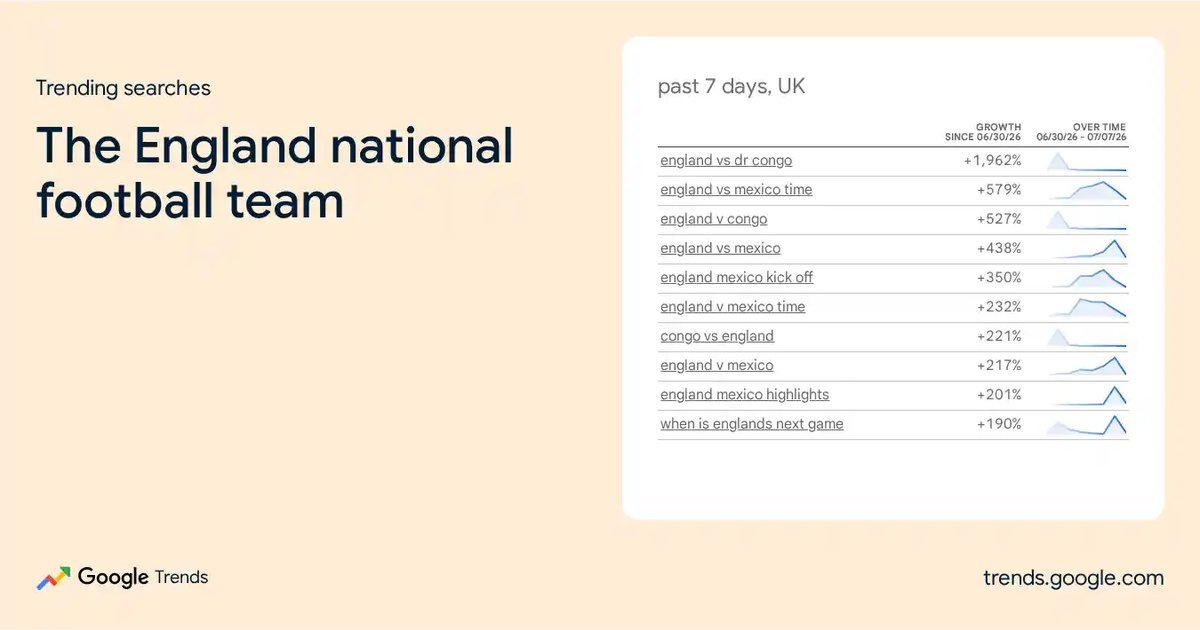
When someone searches for "England vs Mexico World Cup highlights" or "best players 2026 World Cup," they're not looking for a luxury brand's hot take on determination. They're looking for highlights, stats, analysis and context.
The brands winning here answer those searches. They create content around audience intent, not brand sentiment. That's not viral. It's useful. And usefulness builds trust in a way virality never does.
React. Don't hijack.
There's a difference between reacting to culture and hijacking it.
Reacting means understanding what's happening and finding a natural role for your brand.
Hijacking means forcing yourself into a conversation simply because it's getting attention.
Consumers can spot the difference almost instantly.
A sportswear brand celebrating an unforgettable goal? Makes sense.
A travel company helping fans navigate host cities? Useful.
A supermarket sharing recipes for match day? Relevant.
An accounting software company tweeting "It's coming home"? Probably unnecessary.
Not every moment needs your logo on it. Sometimes the smartest marketing decision is knowing when to stay quiet.
Think beyond the final whistle.
The World Cup isn't just ninety minutes of football.
It's months of anticipation before the tournament begins, weeks of planning from travelling supporters, daily searches throughout the competition and conversations that continue long after the trophy is lifted.
Most brands focus on the biggest moments. The best brands focus on the entire journey.
What questions are people asking before the opening game? What problems do they have during the tournament? What do they care about once it's over?
Answer those questions consistently and you'll create far more value than chasing a viral tweet you'll forget about by next Tuesday.
The brands we'll remember.
Years from now, nobody will remember which insurance company tweeted the best football GIF.
We'll remember the brands that genuinely made the experience better. The ones that helped. The ones that entertained because it suited their personality. The ones that understood their audience instead of chasing algorithms.
That's the difference between marketing that follows culture and marketing that earns a place within it.
The Post view.
At Post, we love brands that embrace cultural moments. We just don't think every brand needs to shout the loudest.
The World Cup will generate millions of conversations. Your job isn't to interrupt them. It's to understand them. It’s to help the community grow.
Because attention is easy to borrow. Relevance is much harder to earn. And relevance lasts long after the final whistle.
Substance over mindless algorithm chasing. Every time.